Graveyard Orbit Overtime Mode Contracts
One structure, full progression, stars or Executive Privileges.
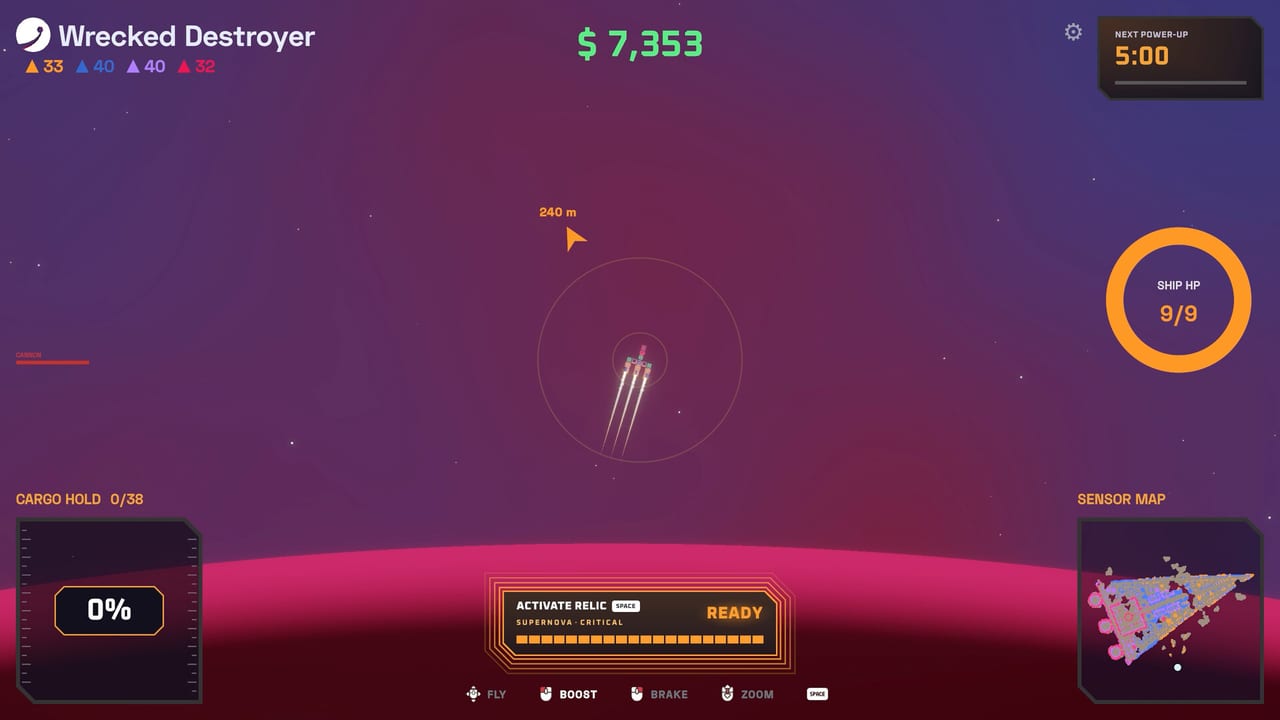
Overtime Mode is Graveyard Orbit’s post-campaign playground. Anchorhead Games built it for players who finished Orbitron’s main cleanup path and still want a bigger one-shot contract where the full progression curve plays out inside a single structure. You can chase stars with disciplined play or lean on Executive Privileges and experiment wildly. This guide explains when to enter Overtime, how to prepare your ship, and how to keep Extractor and research loops alive across a long solitary run.
Overtime is best after the campaign, but it is not required to “finish” the game. If you still struggle with power brownouts or sealed cores, stay in campaign structures and reinforce ship building and mining habits first.
What makes Overtime different
Campaign spreads progression across multiple wrecks and megastructures (six structures from roughly 5,000 to about 250,000 tiles). Overtime compresses a fuller upgrade journey into one oversized contract. That means:
- Longer sessions on a single silhouette
- Mid-run power, cargo, and weapon spikes that must be timed
- Star ratings for clean, efficient clears
- Executive Privileges for alternate rules and freer experimentation
- Less hand-holding from the early Orbitron onboarding fantasy—SUNNY’s cheer still appears, but the structure will test your layout harder
Because everything happens in one place, weak Extractor habits hurt more. You cannot “wait for the next wreck” to fix income; you must process partial hauls and reinvest during the same contract.
Stars versus Executive Privileges
Stars reward playing it straight: smart coverage, matched ore, timely upgrades, and controlled risk around hidden threats. If you enjoy optimization, treat stars like a personal leaderboard for each Overtime contract.
Executive Privileges are the sandbox lever. Use them when you want to try absurd laser densities, gravitron curiosities, or relic combinations without caring about a perfect star path. Privileges are ideal for learning how a new tree feels before you commit campaign resources.
Pick a goal before launch. Mixing “I want three stars” with “I will spend every Privilege for fun” usually produces a muddled run.
Preparation checklist
- Finish enough campaign content to unlock comfortable departments and at least one specialized weapon tree.
- Prove a layout on a large campaign megastructure without constant docking panic.
- Build an Extractor route that multiplies your common ore colors.
- Stock a relic that helps sealed cores or sudden threats.
- Review controls for long-session comfort and confirm system requirements if you raise visual settings for huge tile counts.
- Skim updates for balance changes that affect Overtime scoring or Privileges.
Bring the mental model from Getting Started: bottleneck first, vanity later.
Mid-run progression planning
Divide the structure into phases.
Phase 1 — Shell income: Strip outer layers with your proven coverage. Prioritize cargo fills that fund generators and belt multipliers. Phase 2 — Grid expansion: Spend frame tokens and department unlocks when sockets or power actually gate DPS. Avoid evolving chassis into empty weight. Phase 3 — Core approach: Open a corridor, swap in core-focused mods, and ready relics. Hidden threats often spike here. Phase 4 — Star polish or Privilege chaos: Either tighten efficiency for rating or deliberately break the build to learn.
Weapon choice still follows the six trees—lasers, cannons, pulse, drones, contact, gravitron. A refined laser wall is a popular Overtime shell-clear tool; hybrid core breakers may swap in cannons or gravitron for the finale. Check the tier list and weapons tier list after patches.
Economy inside one contract
Overtime punishes hoarding raw ore. Process often. Each Extractor pass should buy either more sustained DPS, more cargo uptime, or a research mod that changes weapon behavior for the next layer. Color-match remains relevant: if the Overtime structure floods you with blue ore, bias dynamo-friendly processing and the weapons that harvest it cleanly.
If income stalls, do not only buy guns. Inspect belt throughput and power headroom. Many failed star runs are economy failures wearing a combat costume.
Mindset and session length
These contracts are long by design. Take breaks at cargo returns. Use Steam Cloud so you can stop safely. Because the mode is single-player with no multiplayer, you set the pace—Orbitron is not sending a second cleanup unit.
Controller support helps for multi-hour clears; rebind anything that causes menu friction. Keep official links handy for community contract tips after major patches.
When to leave Overtime and rebuild
Leave a run—star or not—when you learn a hard lesson about coverage, weight, or mismatched ore. Take that lesson back to the shipyard, adjust the campaign-proven template, and re-enter with a clearer Privileges or stars plan. Overtime is a laboratory as much as a score chase.
Master that loop and Graveyard Orbit’s endgame stays relaxing instead of exhausting: one enormous wreck, a ship that grows in public, and the quiet satisfaction of leaving nothing behind—on purpose, on rating, or gloriously overclocked with Executive Privileges.
Frequently Asked Questions
Quick answers about mining, ships, and progression.
Do I need to finish the campaign before Overtime Mode?
It is best played after the campaign so you understand systems, but it is not strictly required to access the fantasy of big one-shot contracts.
What are stars in Overtime?
Star ratings reward cleaner, more efficient clears when you play contracts straight without relying on wild Privileges.
What are Executive Privileges?
Privileges let you bend the rules and experiment freely—great for testing outrageous builds instead of optimizing stars.
Why do I run out of money mid-Overtime?
Usually weak Extractor habits or buying chassis expansions before power and multipliers. Process hauls often and upgrade bottlenecks only.
Is Overtime Mode multiplayer?
No. Like the rest of Graveyard Orbit, it is single-player only.