Graveyard Orbit Mining Wrecks and Megastructures
Tile targeting, color match, cargo trips, and safe core breaks.
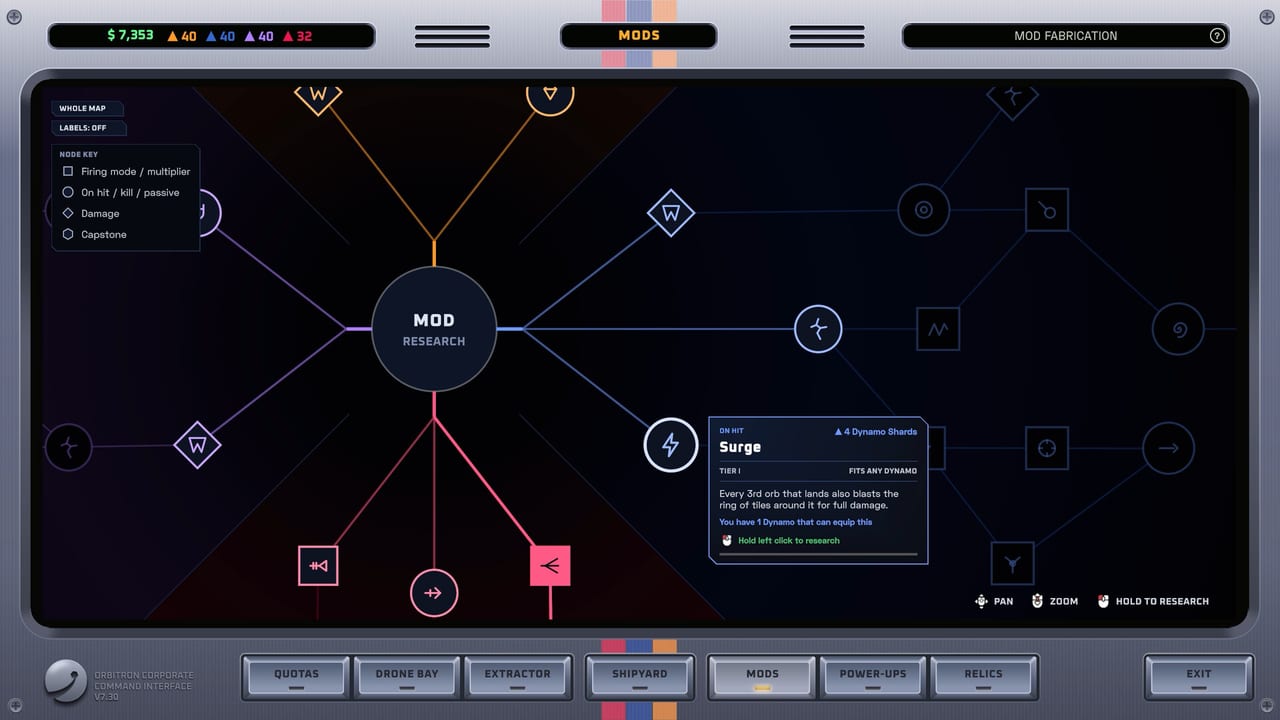
Mining is the contract. In Graveyard Orbit you dismantle wrecked ships and alien megastructures one tile at a time, bag the ore, and leave Orbitron’s books looking tidy. SUNNY will celebrate every haul; your job is to mine efficiently so ship building upgrades arrive on schedule. This mining guide covers targeting, color match, layered structures, sealed cores, hidden threats, and how cargo trips interact with clear speed.
If you still need the first-hour loop, skim Getting Started first. If your guns cannot see the tiles you want, fix placement before blaming the wreck.
How a mining run flows
- Accept the Orbitron contract and note approximate tile count and structure type.
- Approach a soft outer face your weapons already cover.
- Strip tiles in lanes so cargo fills with mixed ore instead of one stubborn corner.
- Return when cargo is full or when a threat forces a reset—do not hover empty-handed.
- Process ore in the Extractor, buy the bottleneck upgrade, and redeploy.
Repeating that loop matters more than heroic last stands on a sealed core with no cargo space left.
Color-match ore
Ore arrives in colors that prefer specific tools and processing paths. Gold leans toward lasers. Blue prefers dynamo-style handling. Other hues reward the matching weapon or belt setup. Matching raises effective value and shortens the grind toward departments and mods. When a structure is heavy in one color, bias your mounted tree and Extractor route toward that preference instead of forcing a mismatched laser wall through the wrong palette.
Keep notes per structure. The six campaign structures are not clones; their outer shells and inner layers emphasize different ore mixes and defenses.
Six structures, layered hulls
Expect roughly 5,000 tiles on the small end and about 250,000 on the largest megastructures. Layers matter:
- Outer shells teach coverage and cargo timing.
- Mid layers introduce denser HP, awkward angles, and the first real power checks.
- Sealed cores gate progress behind focused fire, relics, or specialized mods.
- Hidden threats punish camping in one firing pocket—keep a reposition plan.
Clear a corridor to the core instead of nibbling randomly. Random nibbling fills cargo with low-value scraps while the dangerous center stays intact. Corridor mining also reveals whether your laser wall or hybrid layout actually reaches the tiles that matter.
Cargo trip planning
Cargo is a pacing tool. Too small and you live in the shipyard menu. Too large and you risk losing a long haul if a threat forces a scramble—though most losses are simply wasted time, not permanent failure. Size cargo so a full hold roughly matches a comfortable attention span: long enough to feel progress, short enough that Extractor upgrades stay frequent.
During mid-game, expand cargo whenever return trips interrupt a hot streak of matched ore. During late megastructures, cargo and power should grow together so you are not docking every minute with hungry lasers idling.
Threats, relics, and core breaks
Hidden defenses and sealed cores are why ship grid theory exists. Bring a relic that helps burst or survivability when a core stalls you. Research mods that change weapon behavior—pierce, chain, charge windows—often matter more on cores than another raw damage node. If a core still will not crack, leave, Extrator-cash what you have, and rebuild for single-target instead of wide shell clear.
Drones can keep pressure while you reposition. Contact tools help when you can safely hug a face. Gravitron setups can reshape tile break order. Compare options on the weapons tier list and the broader tier list after patches listed on updates.
The gameplay overview embedded above shows the relaxing-but-methodical pace of cleaning wreckage—use it as a timing reference for how long early contracts should feel.
Mining with controllers and settings
Full controller support makes long mining sessions comfortable. Recheck controls if camera or fire bindings fight your lane discipline. On lower-end PCs, confirm system requirements and lower effects if tile reads get muddy; reading ore color and threat tells matters more than max particles.
From campaign mining to Overtime
Campaign mining teaches systems. Overtime Mode then drops you into bigger one-shot contracts where the entire progression path plays out inside a single structure. Stars reward clean, efficient clears; Executive Privileges let you experiment wildly. Do not jump into Overtime until you can finish campaign layers without constant brownouts or mismatched ore sales.
Practical mining checklist
- Match weapon tree to dominant ore colors when possible
- Mine corridors toward cores, not scattered bites
- Return on full cargo or rising threat, then Extractor-process
- Spend on the bottleneck (power, coverage, cargo, or core burst)
- Slot relics for the next sealed layer, not for vanity
- Revisit ship placement after every structure type change
Stay aligned with Orbitron’s quiet fantasy: leave nothing behind. When mining feels automatic, push value higher in the Extractor and specialize the hull until even the largest megastructure becomes another satisfying cleanup.
Frequently Asked Questions
Quick answers about mining, ships, and progression.
How many structures are in the campaign?
Six structures that scale from roughly 5,000 tiles up to about 250,000, with layers, sealed cores, and hidden threats.
What is color-match ore?
Ore colors prefer certain weapons or processing paths—for example gold with lasers and blue with dynamo-style handling—raising effective value when matched.
Should I always empty a wreck before returning?
No. Return on full cargo or when threats spike. Frequent Extractor trips often fund upgrades faster than stubborn camping.
How do I beat sealed cores?
Open a corridor, bring focused fire or a helpful relic, and research mods that change weapon behavior for single-target breaking.
Is mining different in Overtime Mode?
The tile-by-tile fantasy is the same, but Overtime packs a fuller progression into one larger contract with stars or Executive Privileges.